Mr. Wopsle
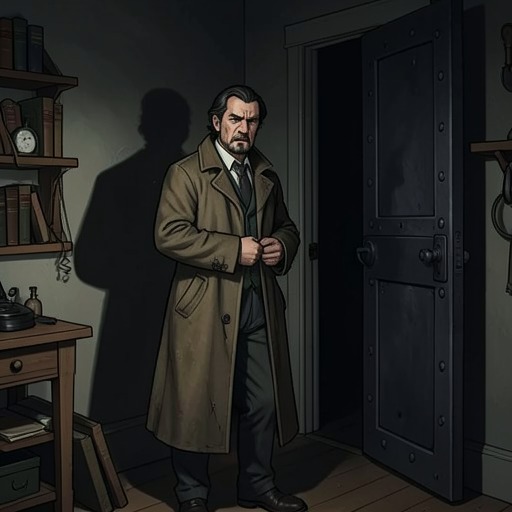
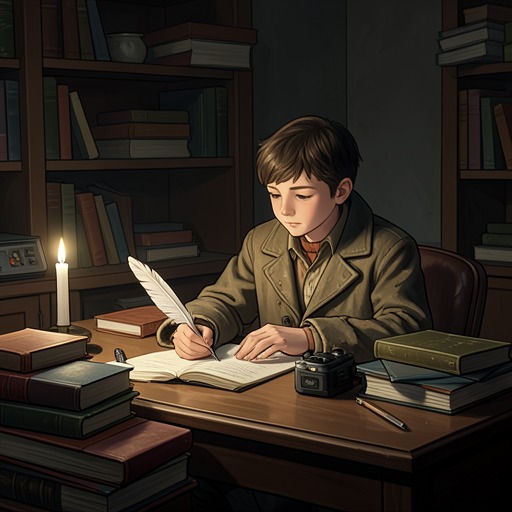
Great ExpectationsMr. Wopsle is a village clerk, amateur performer, and later professional actor whose theatrical self-importance becomes a recurring comic thread in Pip’s story. His movement from church readings and village recitations to a modest London stage career gives his character a small but consequential arc: he seeks an audience wherever he can find one, yet his most important contribution comes when he recognizes an old convict from Pip’s childhood in the theatre crowd.
Identity and Village Ambitions
Mr. Wopsle serves as clerk in the village church, where his deep voice and imposing manner distinguish him from the clergyman whose service he accompanies. He is proud of his vocal gifts and imagines that, if the Church were open to competition, he could make his mark in it. During the service he gives the Amens emphatic force and announces the entire psalm verse after surveying the congregation, as though inviting its judgment on his performance. His ambition is not confined to acting: he treats even his church duties as a stage on which his abilities deserve notice.
After the service, at dinner, he critiques the sermon and suggests that he could have delivered a better one if the Church were open. He calls the day’s subject poorly chosen, remarking that there were many other subjects available. The episode extends the same comic conceit from the pulpit to the table: Mr. Wopsle behaves as if every public performance is an opportunity to demonstrate how he would have done it better.
Teaching and Dramatic Performance
Mr. Wopsle’s great-aunt keeps a village evening school, and he has an upstairs room in her cottage. The pupils pay two pence a week for the supposed educational opportunity, though the aunt regularly falls asleep during the hour. Mr. Wopsle’s presence supplies a different kind of instruction: the students overhear him reading aloud in a grand, intimidating manner, sometimes bumping the ceiling as he moves about upstairs.
The school’s quarterly examinations are largely a fiction. On those occasions Mr. Wopsle turns up his cuffs, fixes his hair, and performs Mark Antony’s oration over Caesar’s body. He follows it with Collins’s “Ode on the Passions,” in which Pip particularly admires his portrayal of Revenge, casting away a bloodstained sword. The scene makes performance more vivid than formal teaching: Mr. Wopsle’s pupils encounter literature through his elaborate enactments, even though his lessons are not systematic instruction.
He also tries to educate Pip by sharing a composition that Pip memorizes with earnest gravity. When Pip asks him for intellectual guidance, however, Mr. Wopsle mainly uses the boy as a dramatic prop, contradicting, embracing, lamenting, bullying, and staging other theatrical actions around him. Pip soon withdraws from these lessons, having been thoroughly mauled in the process. The arrangement shows the gap between Mr. Wopsle’s professed intellectual role and the practical experience of being taught by him.
Encounters with Pip and Village Life
Mr. Wopsle appears in Pip’s village life as both familiar company and a performer who can turn an ordinary gathering into an occasion for display. One Saturday night, Pip enters a common room where Joe is smoking with Mr. Wopsle and a stranger. Joe greets Pip, and the stranger immediately turns to look at him. Mr. Wopsle is present at this meeting, though the evidence does not identify him as the stranger or assign him a part in the ensuing recognition.
On another evening, Pip meets Mr. Wopsle outside a bookshop. Mr. Wopsle has just bought the tragedy of George Barnwell for sixpence and intends to read it aloud to Pumblechook. He treats Pip’s arrival as providential: here is an apprentice to accompany him and listen. Pip, reluctant to return to an unhappy home and glad of company on a dark, dreary road, goes along. Mr. Wopsle’s appetite for an audience thus draws Pip into a domestic visit, turning the boy’s need for companionship into another opportunity for recitation.
Mr. Wopsle also participates in the village’s response to news and public events. During a later apprenticeship year, he reads a newspaper aloud to a group assembled around the fire at the Three Jolly Bargemen, with Pip among his listeners. When the report concerns a prisoner’s guilt, Mr. Wopsle gives a confident verdict despite having no acquaintance with the accused; the assembled group takes courage from his declaration and murmurs agreement. His performance of certainty helps dramatize how readily judgment can form in a public gathering without personal knowledge of the case.
The London Stage and Recognition
Mr. Wopsle eventually pursues acting in London, where Pip hears of him through playbills and Herbert’s reports. His roles are described as decidedly unglamorous: he appears as a faithful Black in a production involving a noble-born child and a monkey, and Herbert has seen him as a comic Tartar in an outrageous hat covered with bells. The contrast with his self-image as a commanding performer is sharp. His career has carried him from village recitations to the stage, but the parts known to Pip are minor and comic.
Pip goes to the theatre one raw evening, seeking an occupation for hours of solitude, and discovers Mr. Wopsle in a performance in which he is repeatedly talked at, sung at, jostled, and otherwise made the object of stage business. Mr. Wopsle has considerable time to observe the audience. From the stage he notices Pip and stares at him with growing intensity, apparently trying to resolve what he sees. Pip cannot understand the look, even after the performance has ended and Mr. Wopsle has appeared in an elaborate stage effect involving a large watch-case.
Mr. Wopsle waits near the theatre door and accompanies Pip into the street. He then recalls a Christmas Day from Pip’s childhood, when he dined at Joe’s home and soldiers came to have a pair of handcuffs mended. He tells Pip that one of the two prisoners sitting behind him in the theatre is the same man he saw on that earlier occasion. The recognition transforms Mr. Wopsle’s keen attention from a comic detail into an important warning: the past has returned in the person of a convict, and Pip has not noticed the danger in the audience behind him.
Narrative Role
Mr. Wopsle is chiefly presented through Pip’s retrospective account, which turns his ambitions and public performances into a comic counterpoint to Pip’s more serious changes in fortune and self-understanding. His deep church voice, mock-examinations, borrowed tragedies, and theatrical roles recur across settings, binding village episodes to Pip’s later life in London. The comedy depends on the difference between the grandeur Mr. Wopsle projects and the modest or ridiculous circumstances in which he performs.
Yet his theatrical habits do not make him merely decorative. As the newspaper reader at the Three Jolly Bargemen, he voices a confident judgment that the group adopts; as an audience-facing actor, he notices the prisoner Pip fails to recognize. The same attention-seeking performer who turns sermons and recitations into personal showcases becomes, in the theatre, an alert witness. His recognition supplies a link between Pip’s childhood encounter with the law and the unresolved threat of the convict’s return.